






NET is used by Mind-oriented practitioners to help their clients process and release stress-related issues — both in mind and body.
While the NET protocol itself is not considered to be psychology, the following principles apply within the steps of NET:
- cognitive (identifying thoughts and internal dialog associated with recollections),
- emotional (identifying the emotions the recollection elicits), and
- behavioral (how the recollections affect actions, relationships, etc.).
Within the steps of NET, the practitioner uses the following 8 dynamics to help address unresolved mind/body stress:
- Emotions are Physiologically Based
- Pavlovian Responses
- Emotions/Meridian System Correlations
- Repetition Compulsion
- The Role of Memory and Physiology
- Manual Muscle Testing
- Semantic Responses
- 'Like cures Like'
When working with NET, practitioners use a manual muscle test as a tool to help identify involuntary physiological responses. In this way, the muscle test is used as a gauge of autonomic reactivity to given physical and/or verbal stimuli. read more
Mind-oriented practitioners often start the NET portion of a session with an "I'm OK" Personal Declarative (PD). If a PD tests weak, the practitioner can then find an associated pulse point, identify a related emotion and further develop the core issue.
During the NET correction phase, clients are asked to hold a specific pulse point and the Emotional Points (located on the forehead, halfway between the pupils and the natural hairline), and engage in a simple breathing process while they focus on the identified distressing event.
When finished, the practitioner will retest the original "I'm OK" PD, and it should now test strong — indicating the client is congruent with the PD and more balanced in regard to this issue.
A 'Home Run Formula' Model of Care
Although stress and stress-related sypmptoms can be a huge component of health, we know other factors can also cause and/or contribute to unwanted mind and body conditions. read more
Generally whatever we do as practitioners fits on one or more of the bases of the Home Run Formula. Practitioners often have a primary focus on one of the bases and will later address the other bases in the order they feel is best or refer as necessary.
More on 'What is NET' & How it Evolved
In the mid 1980s, Dr. Scott Walker started developing a procedure (which he eventually named NET) that would help his chiropractic patients who had chronically recurring vertebral subluxations — those cases where a traditional adjustment didn't always hold and the patient's symptoms failed to fully resolve. What Dr. Walker came to discover was that there was often an associated emotional/stress overlay that was retriggering the physical problem, and once this was addressed, patients got better — both in body and mind. read more
Treating Mind & Body — Scientific Evidence
Results from a 2017 study of patients with traumatic stress symptoms demonstrated significant changes in the NET group (as compared to the control group) in the functional connectivity between the cerebellum, the amygdala, and parahippocampus, as well as reductions in autonomic reactivity based on heart rate response to the traumatic stimulus.
In another 2021 published study, NET or control treatments were given twice weekly for 4 weeks to patients with chronic low back pain. Compared to the placebo group, patients receiving the NET treatment showed clinical and statistical significance with declines of virtually all pain markers, as well as showed positive gains in quality-of-life indicators. More about Research
Join us at an upcoming NET Seminar!
Emotions are Physiologically Based
While emotions used to be thought of as only residing in the brain, it is now known that the molecular basis of emotions involve the physiology of 'information substances', which are comprised of neuropeptides, hormones, and other specialized information molecules that permeate the entire body — including our DNA. This dynamic has been well described and validated by Candace Pert, PhD, et. al. Visit http://candacepert.com/library/ for more works by Dr. Pert.
Pavlovian Responses
We know through Pavlov's work that animals can be conditioned, and we also know that humans can be conditioned too. In addition, we know 'emotional conditioning' can also take place. While conditioning is normal under most situations, so is its counterpart, the natural elimination of a conditioned response — called 'extinction'. When we have an 'emotional conditioning', it is normal for the natural extinction process to take place. However, there are times when a conditioned emotional response does not fully extinguish, and this is where we can utilize NET to help the body complete the process. This dynamic has been scientifically validated by many, including Pavlov, et. al. Also visit https://www.ncbi.nlm.nih.gov/pmc/articles/PMC5390734/ for 'Social Pavlovian Conditioning'.
Emotions / Meridian System Correlations
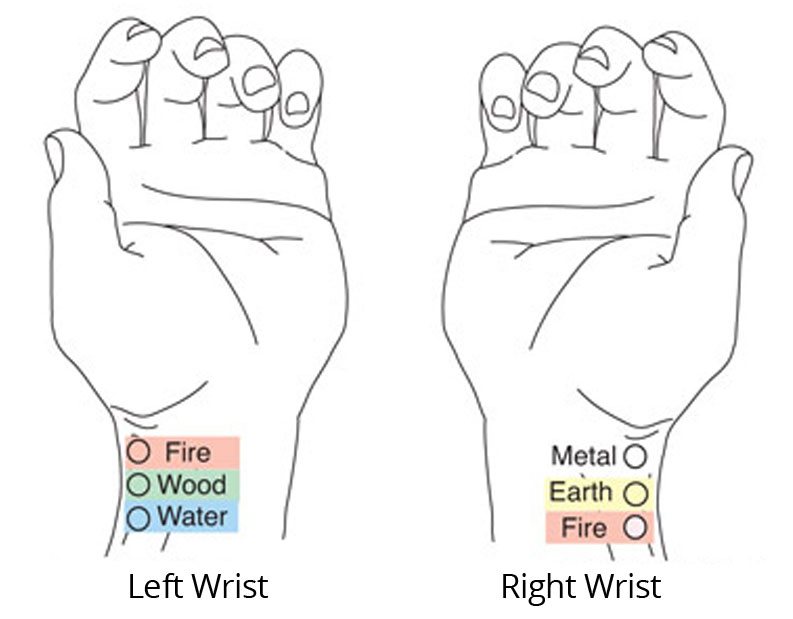
Using the Law of Five Elements from Acupuncture, which has been clinically validated for more than 1,500 years, we know that specific emotions are linked to specific meridians. The Pulse meridian points have been named after the Elements of Fire, Wood, Water, Metal and Earth, and each is associated with various emotional/stress responses: For example:
- Fire can be associated with abandoned, vulnerable, etc.
- Wood can be associated with anger, frustration, etc.
- Water can be associated with fear, dread, etc.
- Metal can be associated with grief, sadness, etc.
- Earth can be associated with worry, hopelessness, etc.
Repetition Compulsion
Sigmund Freud's concept of 'repetition compulsion' notes that once we have been emotionally traumatized (and conditioned), we may unconsciously seek to repeat a similar trauma in the future. Essentially, what has traumatized an individual earlier in life, if unresolved, will often revisit them again in similar future circumstances. Visit https://www.ncbi.nlm.nih.gov/pmc/articles/PMC3181920/ for a related paper on the 'Neuroplasticity in Addictive Disorders'.
The Role of Memory and Physiology

Science has proven that when we remember a past event, it's possible to have a 'physiological response' that is similar to the one that happened back then. Here's an example: Pretend you're biting into a lemon; now imagine squeezing some of the juice into your mouth and feeling your mouth pucker in response to that sour taste! ...If you're like most people, your mouth is probably starting to water, and this is a perfect example of having a physiological response to a memory (tasting a lemon). Emotional responses can also be similarly stimulated with the memory of a past traumatic or stressful event. Visit https://www.ncbi.nlm.nih.gov/pubmed/28181091 for a paper titled 'Neuro Emotional Technique Effects on Brain Physiology in Cancer Patients with Traumatic Stress Symptoms.'
Manual Muscle Testing
It has been demonstrated that manual muscle testing can be used to access the physiology of the body, including the physiology of an emotional response, and that muscles — which initially test strong in the clear — will test as being inhibited (weak) when words are posed that have a 'charge' or stress-response associated with them. Visit https://www.ncbi.nlm.nih.gov/pmc/articles/PMC1847521/ for a paper 'On the Reliability and Validity of Manual Muscle Testing' by Cuthbert and Goodheart.
Semantic Responses
Semantic response can be described as the psychological and physiological reaction to words and language and other symbols in relation to their meanings. For example, the physiology of the body can be reactive not only to the sight of a spider, but also to the word 'spider' or a picture of a spider. This dynamic has been validated by Monti, et. al., with non-congruent words testing as a physiologically weakened muscle response. Visit https://www.ncbi.nlm.nih.gov/pubmed/10407911/ for Monti's paper, 'Muscle Test Comparisons of Congruent and Incongruent Self-referential Statements'.
'Like cures Like' (Part I & Part II)
Part I. NET uses a 'like-cures-like' principle in this way: When we ask patients to re-experience an emotion from their past (such as anger, fear, etc.) within the context of doing NET, we're asking them to go back and briefly relive a memory — and in reliving that memory they produce a feeling (with an associated physiological response), and that feeling is an important 'like-cures-like' component of the NET correction process.
In developing NET, Dr. Scott Walker came to find that there were times when the body needed extra support to fully release a stressful issue. After more than 2 years of clinical investigations and testing various products (essential oils, herbs, remedies, vitamins, etc.), he found that specific homeopathic remedies significantly helped the NET process where other products did not.
Part II. Homeopathy also uses a 'like-cures-like' principle — In fact, it's a verified law of pharmacology called the Law of Similars. Using this principle, Dr. Walker created specific NET Remedies formulas, which he clinically tested and then shared with other practitioners. Since 1994, the NET Remedies have been used by thousands of practitioners to help support their patients in the release of stress-related toxins, and they are considered to be a valuable enhancement to the NET process. read more
Involuntary Physiological Responses

Within the NET process, the practitioner uses the manual muscle test as a tool to help identify associated involuntary physiological responses. Just as it is normal to tap below the knee and have an involuntary Patellar Reflex response, similarly the muscle test can be used to evaluate an involuntary physiological response to various stimuli, such as physical contact or verbal stimuli.
This type of testing has been scientifically validated and it is classified as a 'functional neurology' muscle test.
It is important to note that when doing NET the muscle test is never used as a 'yes/no' or 'true/false' indicator, and it is never used to verify the past or say 'what is', nor is it ever used to predict the future or tell anyone what they should or shouldn't do.
Another important note: Within the NET process, the muscle test is always considered to reflect the patient's EMOTIONAL REALITY, as it may or may not correspond with actual or historical reality. In fact, science has proven that pieces of our memories are often stored together with other associated memories, and later when a memory is recalled, we frequently add some of those other pieces that did not originally happen! Thus, the verbal cues within the NET process are purely used with the objective of determining the presence or absence of an involuntary physiological response to the semantics being utilized.
In addition to verbal cues, the muscle test can also be used to determine if there is an involuntary physiological response connected with a physical touch or contact. Examples include areas of the body that may be holding trauma or areas that have associated meridian points, such as an active acupressure pulse point on the wrist.
The manual muscle test is an important component of the NET process. It's a valuable tool that helps the practitioner find unresolved trauma and stored patterns of stress that can interrupt the body's natural ability to heal itself. Once identified, NET helps connect the mind and body in a way that allows for the restoration of physical health and the release of stress-related issues.
The 'Home Run Formula'
To address the many possible factors that can influence health, we use a Home Run Formula model as a way of generally categorizing areas that may need to be addressed.
1st base - Emotional/stress
2nd base - Toxic influences
3rd base - Nutritional needs
4th base - Physical/structure
We know any problem can include multiple factors from any of the other bases, and it is important to address all factors related to one's health to reach our optimum health potential.
'Mind-oriented' practitioners may often start with 1st base (Emotional/stress) and later address 4th base (Physical/structure) when evaluating 'where stress is stored in the clients body'. Of course, 2nd base (Toxic factors) can influence how we think and feel, and 3rd base (Nutrition) is clearly an essential piece for balanced mind and body health. For example, it is well known that Vitamin B can help clients who are experiencing symptoms of depression and anxiety.
Visit https://www.ncbi.nlm.nih.gov/pmc/articles/PMC3658370/ for a paper titled The Effect of Methylated Vitamin B Complex on Depressive and Anxiety Symptoms and Quality of Life in Adults with Depression.